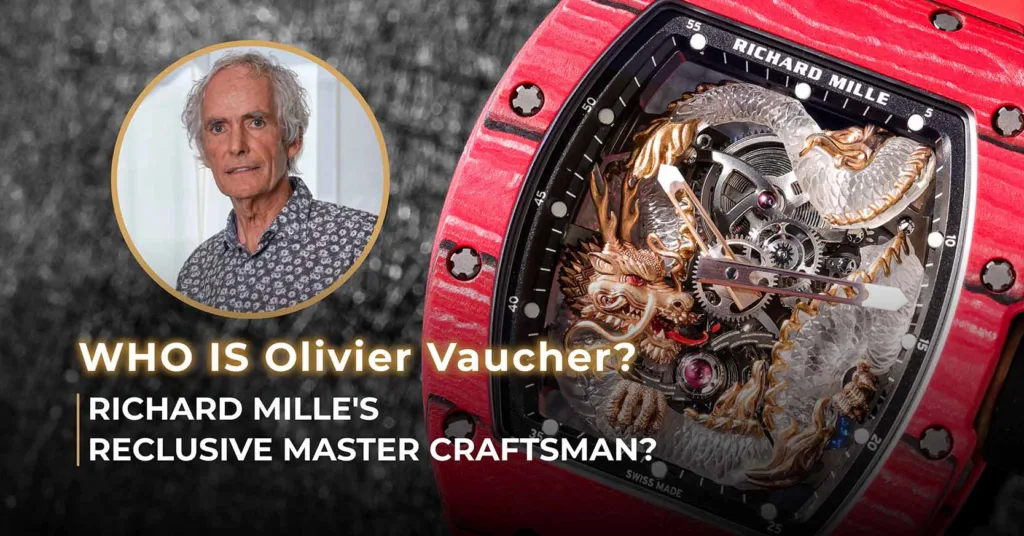
In the world of Richard Mille, any timepiece featuring engraving artistry is almost always an exceptionally rare piece, produced in vanishingly small numbers. Behind these breathtaking three-dimensional miniature sculptures stands one indispensable figure: the celebrated Swiss master engraver Olivier Vaucher. Many of the most talked-about, hardest-to-find engraved masterpieces in the Richard Mille catalogue today are the work of his hands and his Geneva atelier — among them, the limited edition RM57-03, created especially for the Asian market, stands as one of his defining achievements.
The Making of a Master Engraver
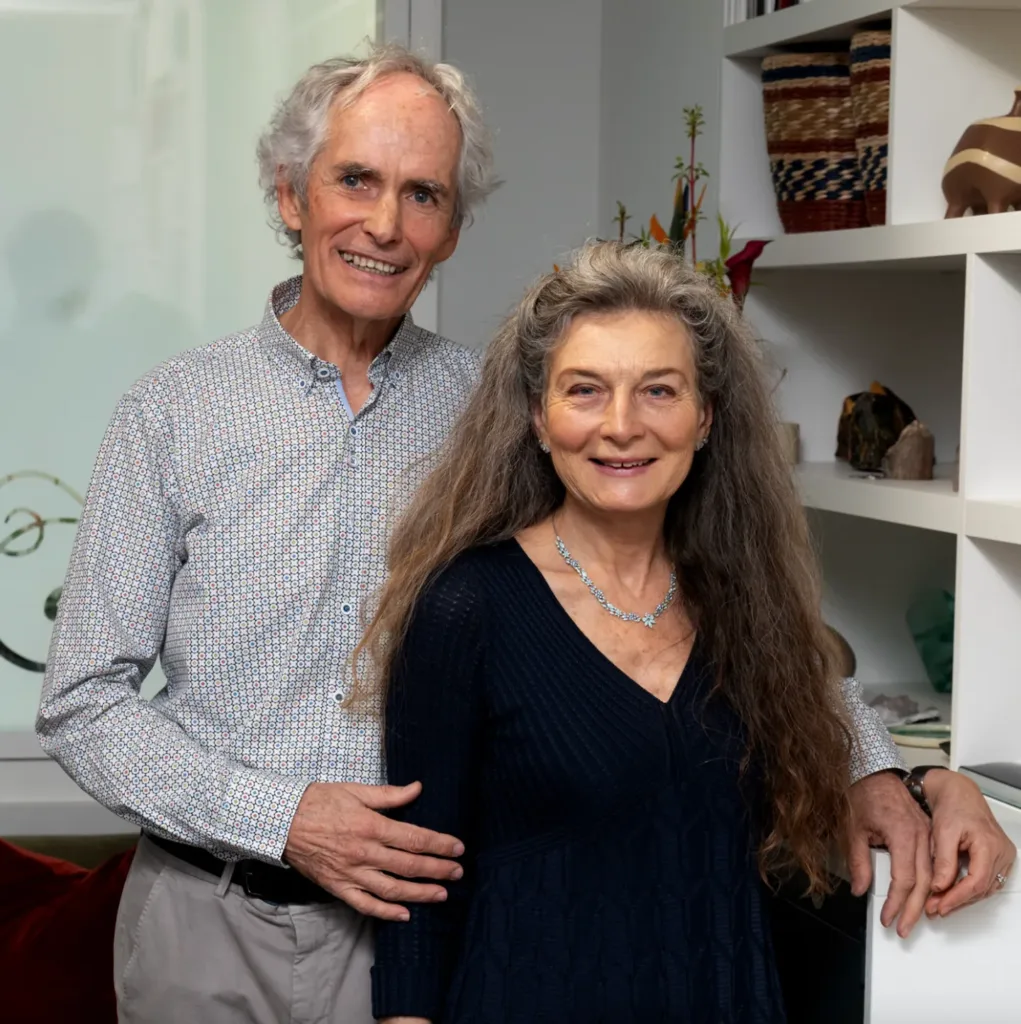
Olivier Vaucher and his wife, enamel master Dominique Vaucher (From Atelier Olivier Vaucher)
Olivier Vaucher is one of the most respected names in Swiss haute horlogerie’s world of miniature engraving, and his path began in the 1970s. Born into a watchmaking family — his father was a watchmaker at the Fontainemelon manufacture — Olivier did not, in the end, follow directly into the watch industry. In his youth, the Swiss watch trade was in the grip of the quartz crisis, a turmoil that pushed him toward a very different path from his father’s: the study of the engraver’s art.
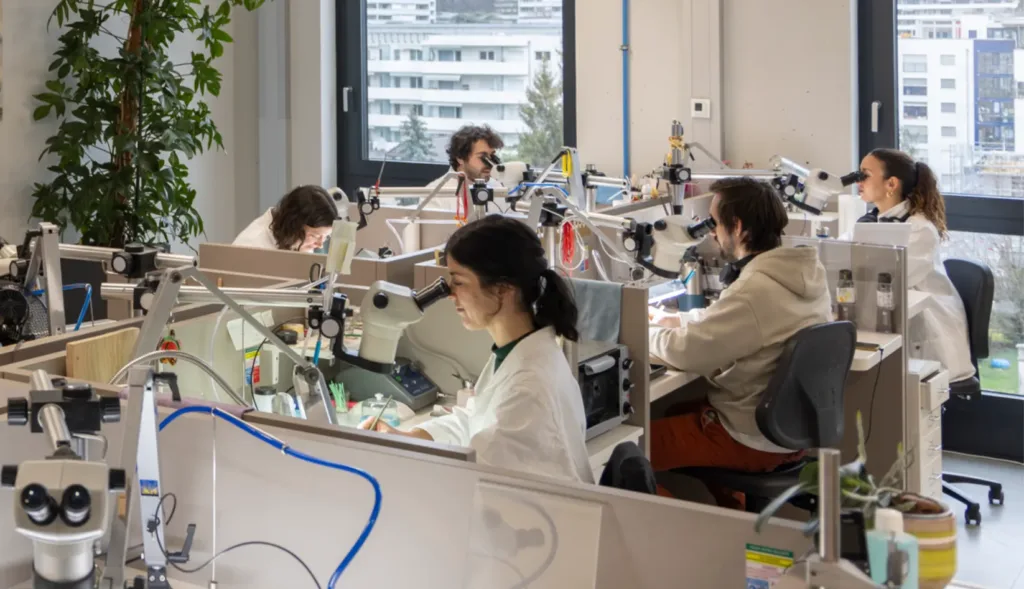
In 1978, he founded his own workshop, Atelier Olivier Vaucher, which has become Switzerland's foremost maker of artistic dials (From Atelier Olivier Vaucher)
After graduating in 1974, he worked in the printing trade as a steel-plate engraver before joining Blum & Züllig, one of Geneva’s foremost engraving workshops. Once he had mastered his craft, he founded his own atelier, Atelier Olivier Vaucher, in 1978, leading a team of skilled artisans devoted to the art of miniature dial engraving. Notably, his wife, Dominique Vaucher, is an accomplished enamel master, and together the couple fused gold engraving with enamelling to build the workshop into Switzerland’s foremost maker of artistic dials.
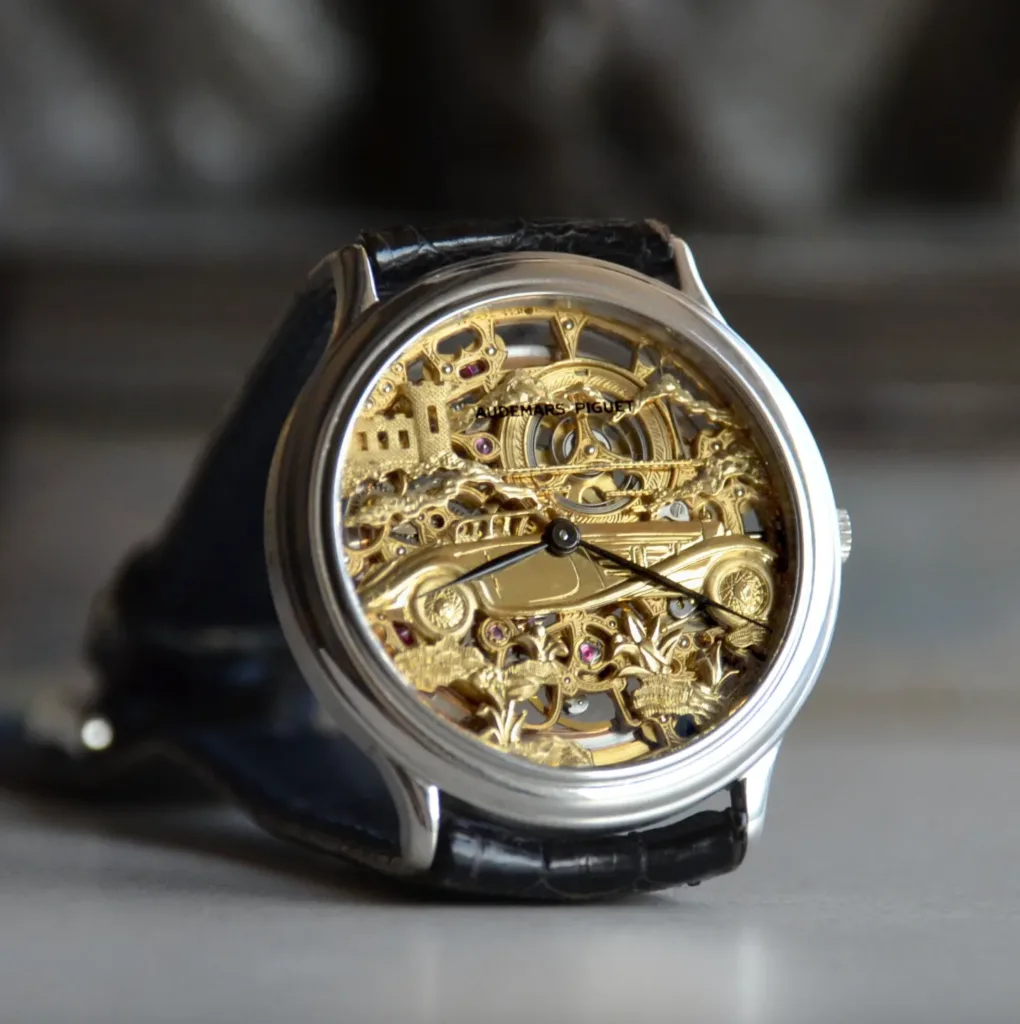
A dial made for Audemars Piguet (From WatchProSite)
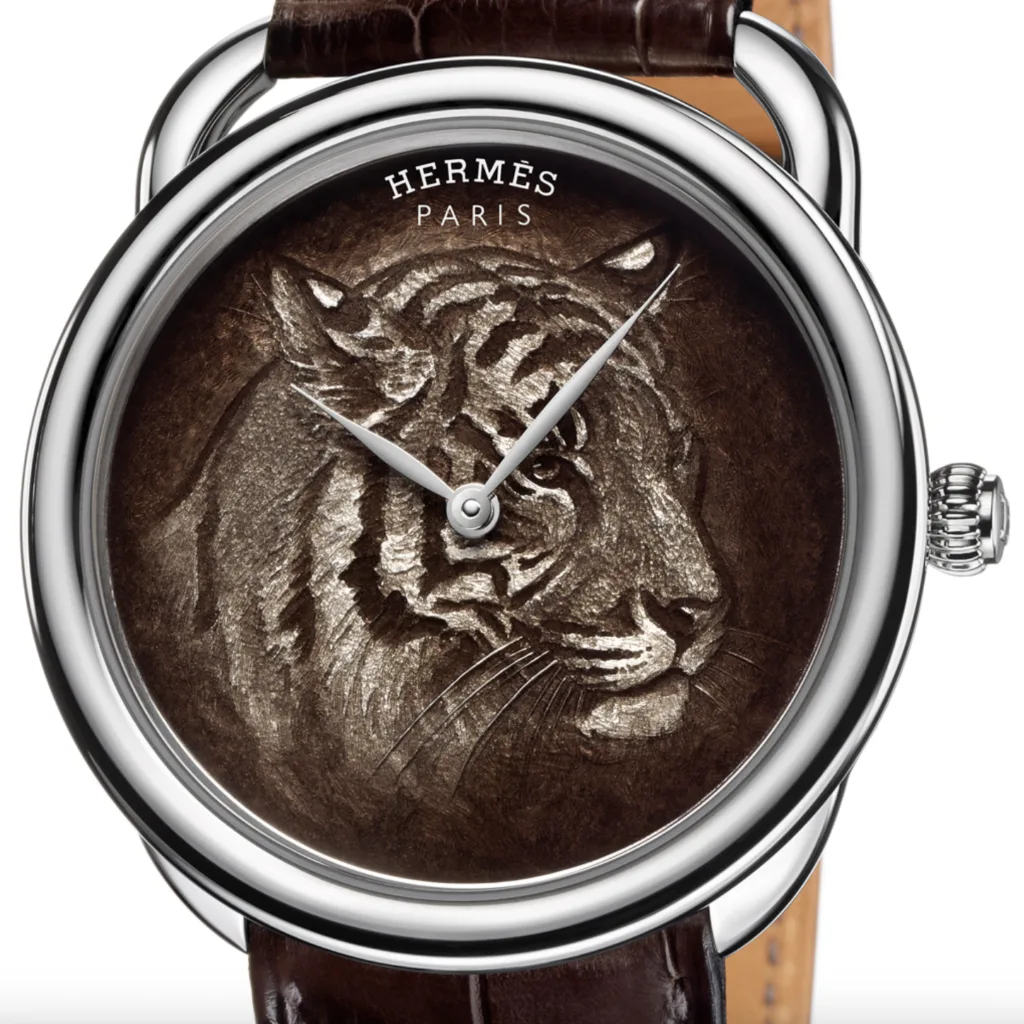
A dial made for Hermès (From GPHG)
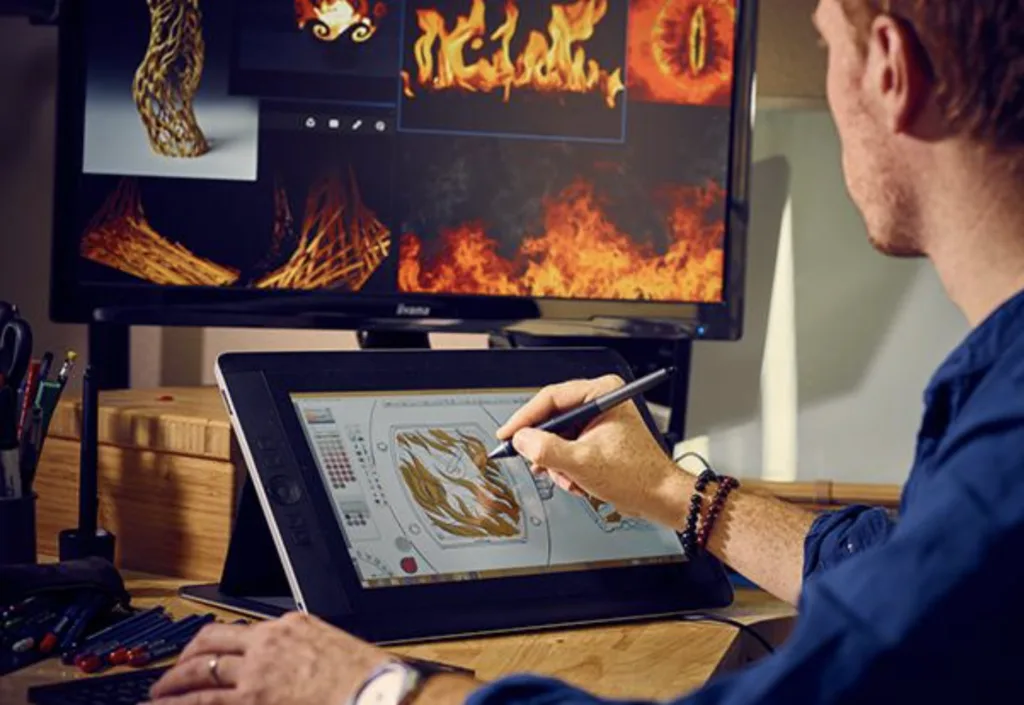
A sketch for the RM26-02 (From Atelier Olivier Vaucher)
Over the years, he has created extraordinary dials for countless high-end watch brands, among them established houses such as Vacheron Constantin, Hermès, Van Cleef & Arpels, and Audemars Piguet. His workshop is versed in an array of highly demanding techniques, including champlevé enamel, cloisonné enamel, grand feu enamel, and miniature engraving. When Richard Mille later sought to bring visually striking, three-dimensional classical sculpture into its resolutely modern, openworked movements, Olivier Vaucher — already renowned as a master of miniature engraving — was the natural partner for the brand.
Four Richard Mille Sculptures by Olivier Vaucher
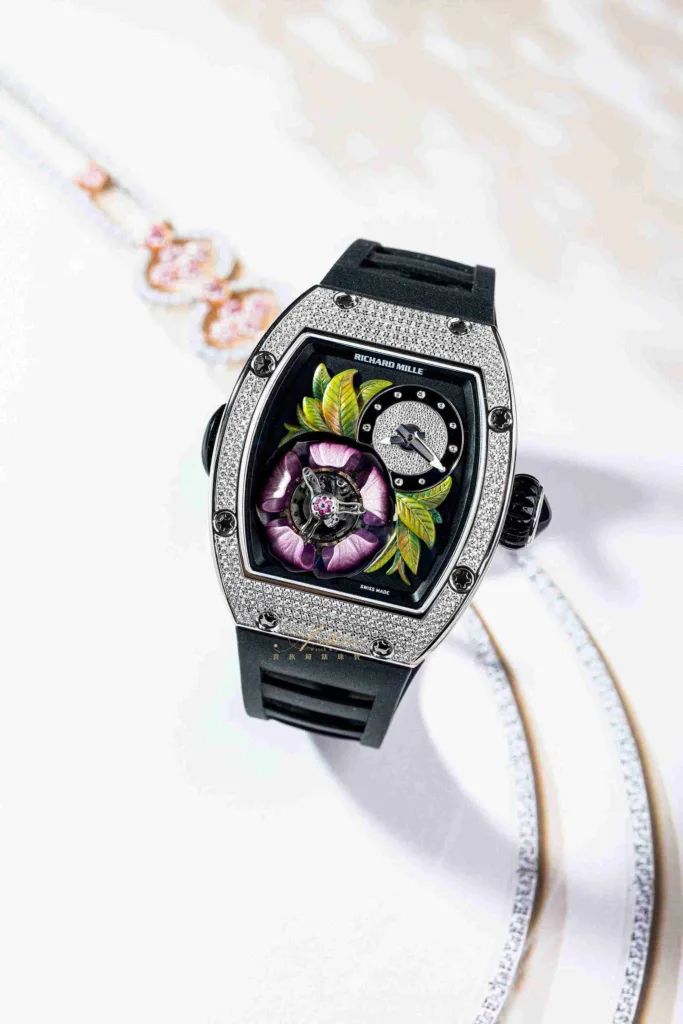
RM19-02 Tourbillon Fleur
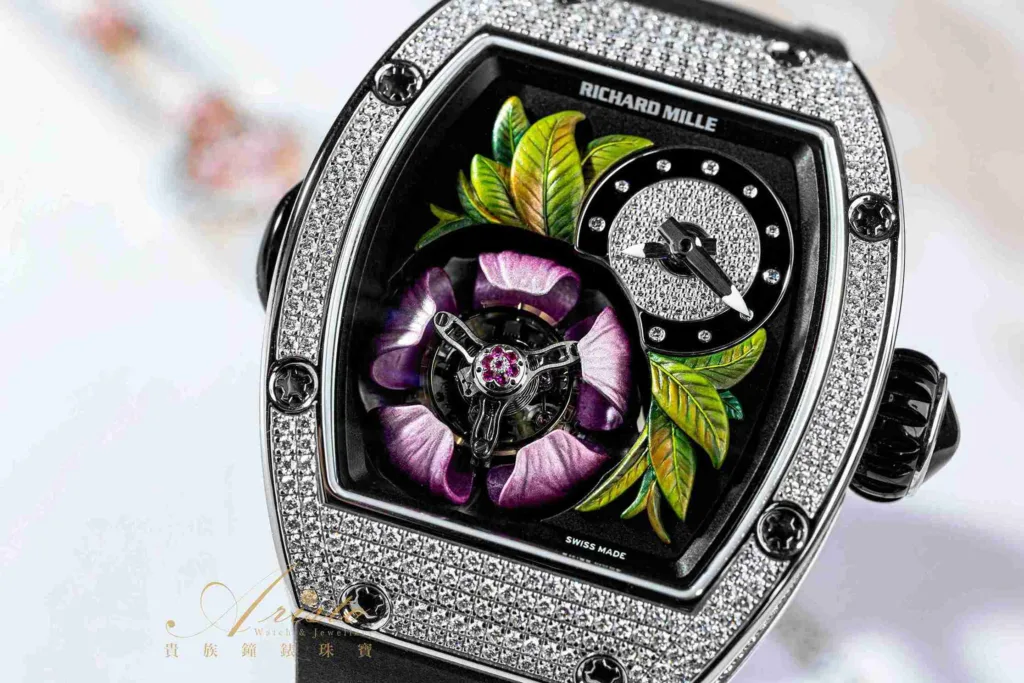
The magnolia flower, meticulously carved by Olivier Vaucher's workshop
由 Olivier Vaucher 工坊精心雕刻的木蘭花
Among the most emblematic results of this unconventional partnership is the RM 19-02 Tourbillon Fleur, a flying tourbillon watch of extraordinary elegance and kinetic beauty. At its heart lies a magnolia flower carved by Olivier Vaucher’s workshop, its petals hand-sculpted entirely from pure gold. Within an extremely confined space, the master rendered the natural growth patterns and three-dimensional curvature of the petals with remarkable delicacy. What makes the watch truly captivating is how this gold-engraved magnolia is paired with an intricate mechanical animation: a press of the pusher at 9 o’clock causes the flower to slowly bloom, revealing the tourbillon as it rises gently from the opening blossom. To bring the flower to life, Olivier Vaucher and his team also applied an exceptionally fine hand-painting technique, dusting each metal petal with soft blush-white tones — lending a touch of warmth and vitality to the otherwise cool, mechanical austerity of the openworked movement.
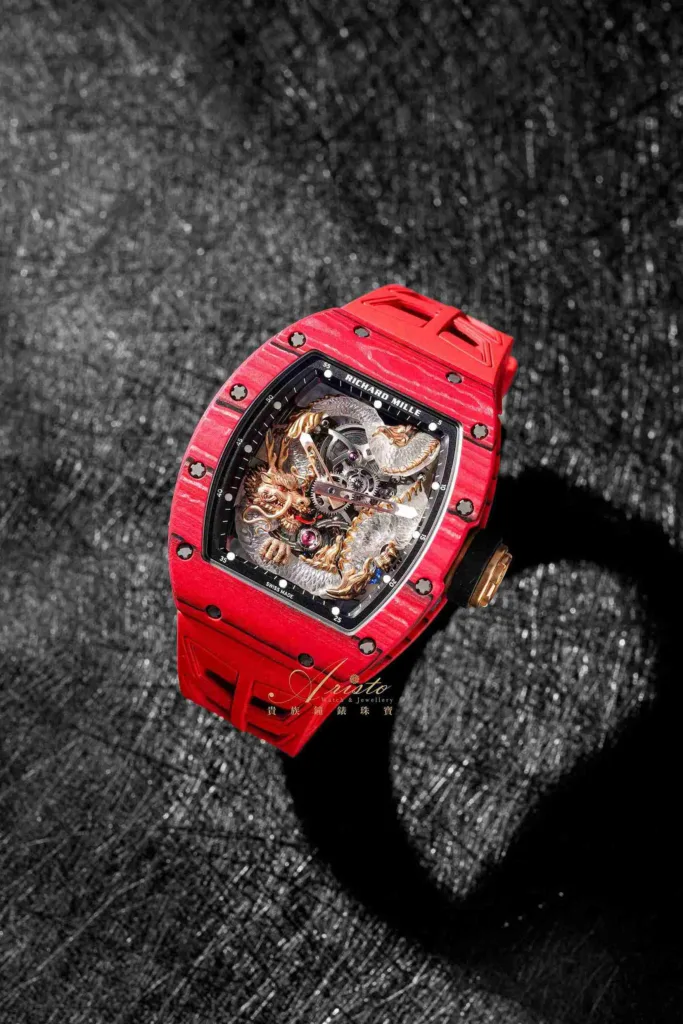
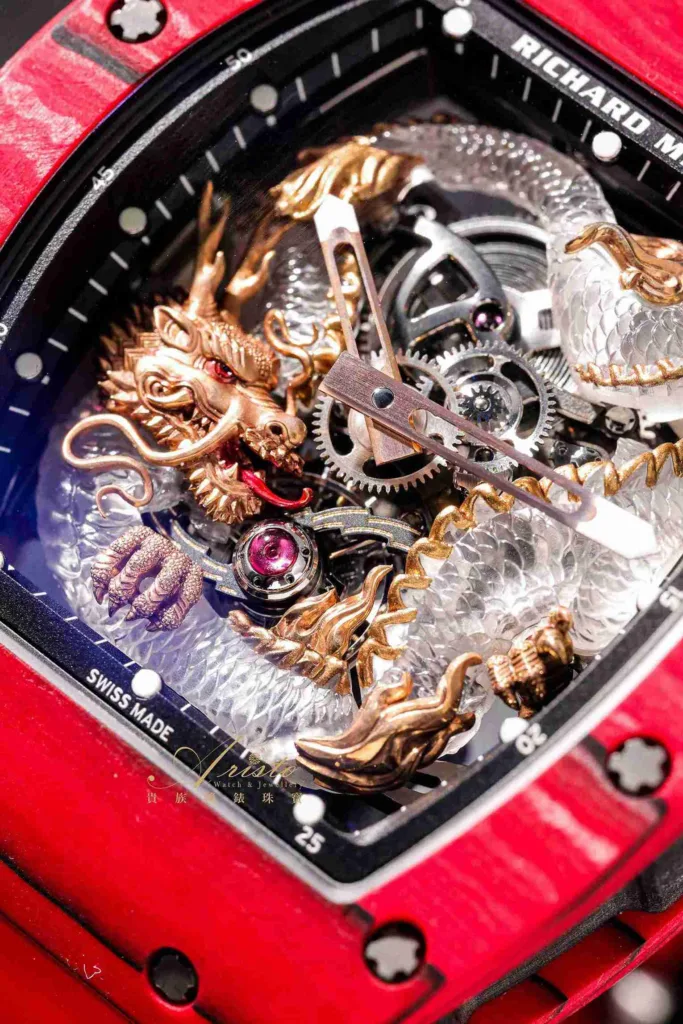
RM57-03 Tourbillon Sapphire Dragon Red TPT
RM57-03 Tourbillon Sapphire Dragon Red TPT
The sapphire-crystal dragon carving in the RM57-03
Created as a limited edition for the Asian market, the RM 57-03 Tourbillon Sapphire Dragon Red TPT pushes the art of engraving to its physical limits. In haute horlogerie, engraving precious metal is technically demanding but relatively common; carving in three dimensions on sapphire crystal, however, is a challenge of an entirely different order. For the RM 57-03, the brand combined precious metal with sapphire crystal to create the dragon carving. Because sapphire crystal is exceptionally hard, conventional engraving tools are simply unable to shape it with any precision. To overcome this, Olivier Vaucher’s workshop developed an entirely new set of micro-laser cutting tools and fine polishing techniques, and its artisans spent countless hours sculpting the dragon’s scales and the fluid, sinuous line of its body into this fragile yet immensely hard material. The master then skilfully integrated a head and claws in red gold, creating a striking contrast between crystalline transparency and the weight of precious metal — a piece that decisively breaks down the traditional boundaries of watchmaking materials and engraving.
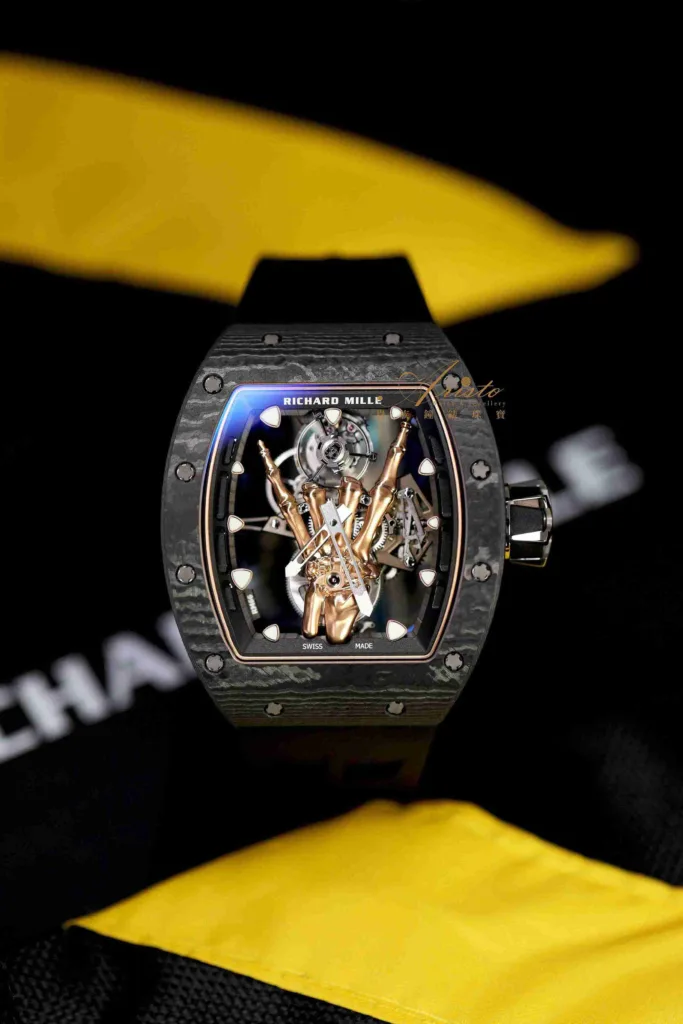
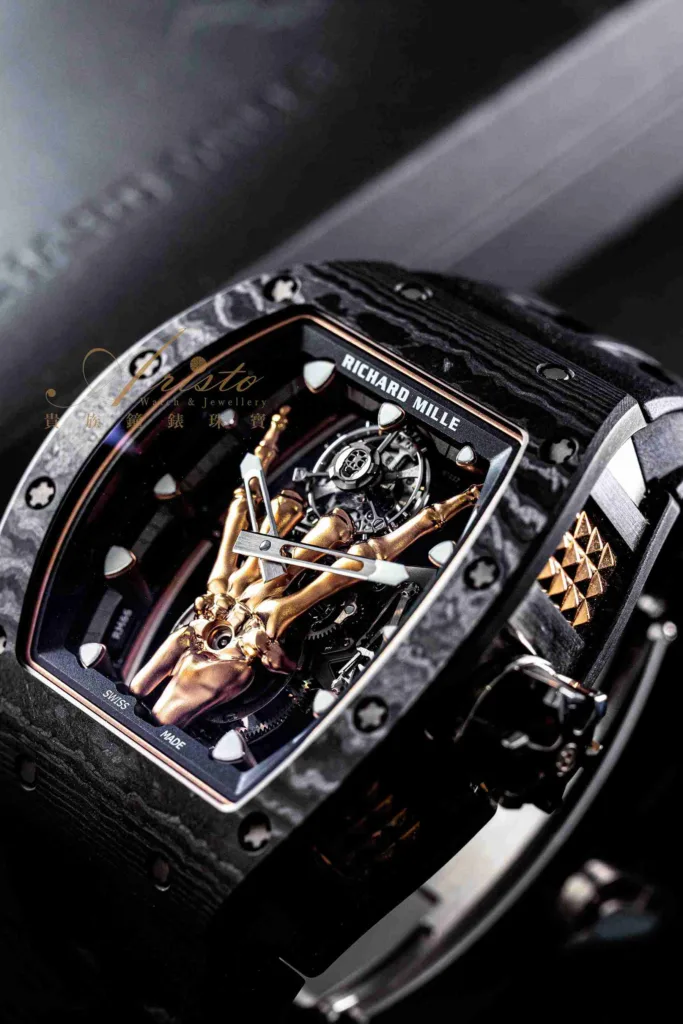
RM66 Flying Tourbillon
RM66 Flying Tourbillon
The "devil horns" hand gesture at the centre of the dial, a nod to rock 'n' roll spirit
Another work charged with rebellious energy and visual drama is the RM 66 Flying Tourbillon, which sparked considerable discussion upon its release. Its most arresting feature is the miniature “devil horns” hand gesture at the centre of the dial — an icon of rock ‘n’ roll spirit. This three-dimensional miniature gesture was likewise carved by Olivier Vaucher himself, in 5N red gold. Working at such a minute scale, the master captured with precision the contours of the hand’s bones and the natural curve of the bent fingers. Using specially made micro-engraving tools under magnification, artisans removed excess red gold fraction by fraction, then applied multiple layers of sandblasting and polishing to give the metal gesture a strikingly lifelike quality. Suspended within the openworked movement, this distinctive gold component projects a defiantly avant-garde attitude.
RM26-02 Tourbillon Evil Eye
RM26-02 Tourbillon Evil Eye
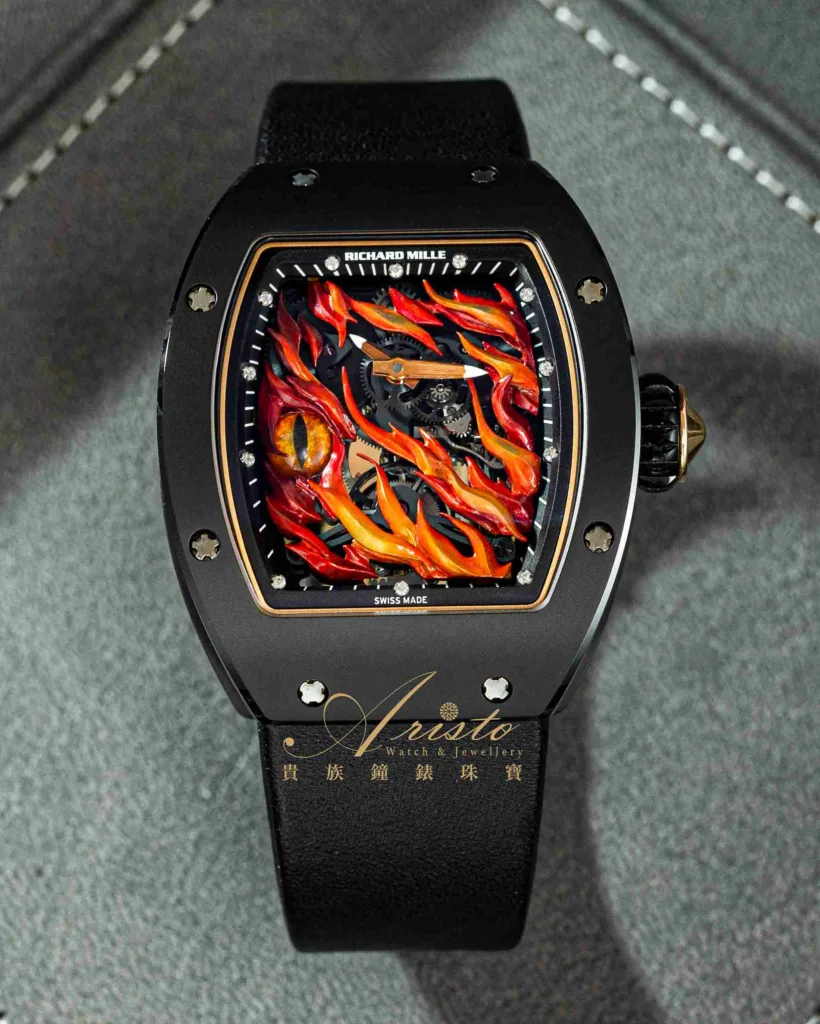
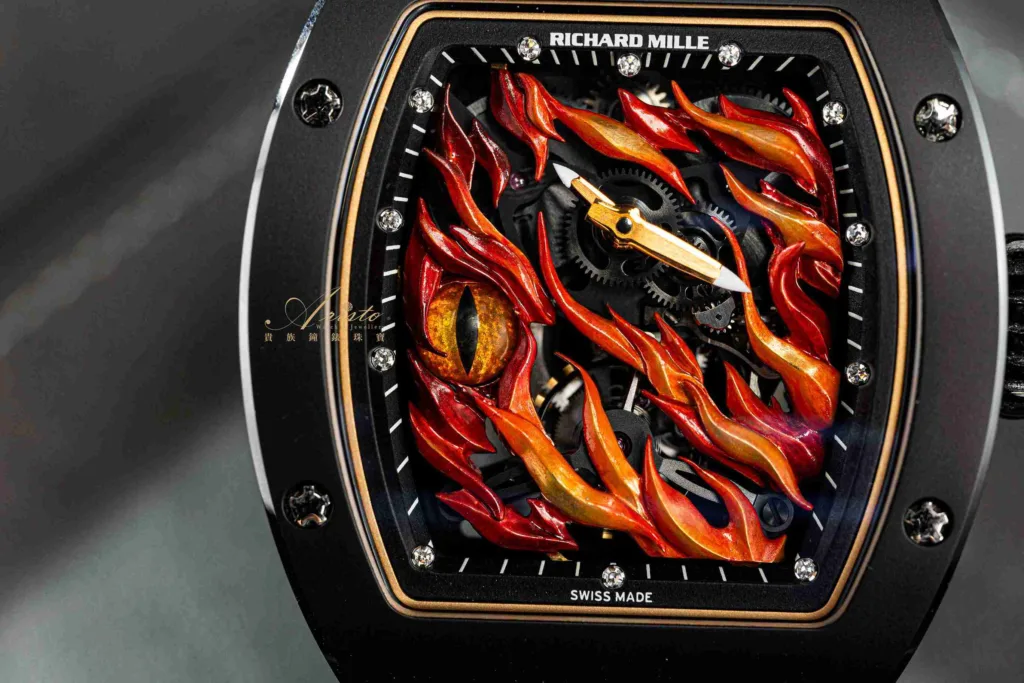
Olivier Vaucher's delicate carving of the evil eye and flames
The final piece in this collection unites gold micro-engraving with grand feu enamelling: the RM 26-02 Tourbillon Evil Eye. Its design draws on the mystique of the “evil eye” in Western folklore, a symbol believed to ward off misfortune. Olivier Vaucher carved the contours of the eye and its surrounding flames with exquisite precision, and the eyeball itself was then rendered in grand feu enamel, fired repeatedly at high temperature to achieve a deep, remarkably lifelike iris. Encircling the eye is a dynamic, multi-layered carving of red-gold flames, finished with painstaking hand-applied micro-lacquer that lets the colour of the flames shift gradually from deep red to bright orange, producing a strikingly vivid, fire-lit effect. Bringing together an ancient enamelling art and a thoroughly modern mechanical architecture, the RM 26-02 stands as a rare and remarkable work of horological art.