Both carry the Patek Philippe name, both wear the guise of a sports watch, and both shoulder the weighty complication of the perpetual calendar — yet Cubitus 5840 and Nautilus 5740, this pair of “close relatives,” express entirely different personalities within the same calendrical logic. One is Nautilus 5740, a watch whose standing is already unassailable; the other is the Cubitus 5840 skeletonized perpetual calendar, representing the brand’s newest design language. Between these two watches from different collections, what are the fundamental differences in design?
A Legacy of History
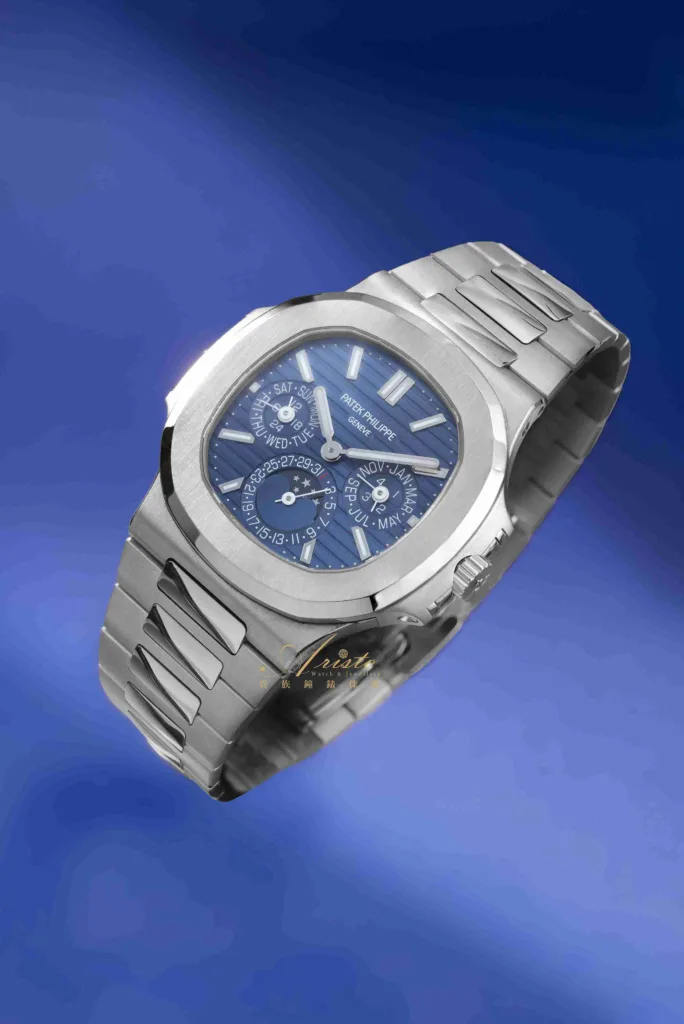
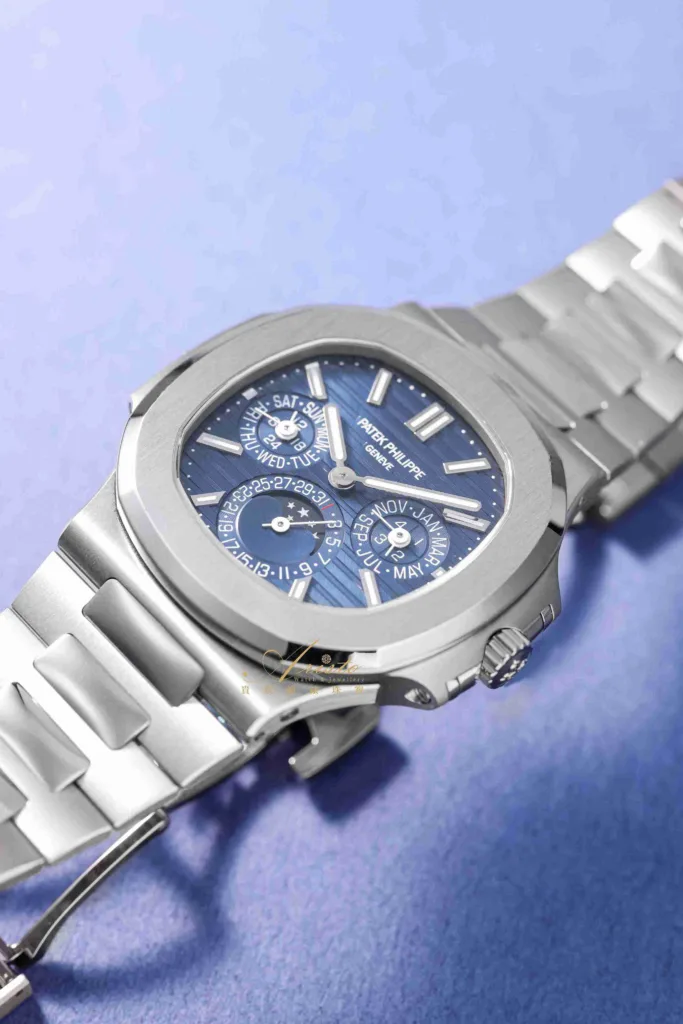
Patek Philippe Nautilus 5740/1G-001
To truly understand what makes each of these watches unique, we must first look back at their respective histories and the significance of their creation. The Nautilus 5740 was born in 2018, a year of immense historical significance for the entire Nautilus line. As the collection’s first perpetual calendar since the line’s debut in 1976, the 5740 successfully merged Gérald Genta’s signature porthole design with the perpetual calendar complication. The Nautilus 5740 became an instant classic upon release, and with its remarkably slim white gold case and iconic blue sunburst dial, it cemented a position within sports perpetual calendars that has proven difficult to surpass.
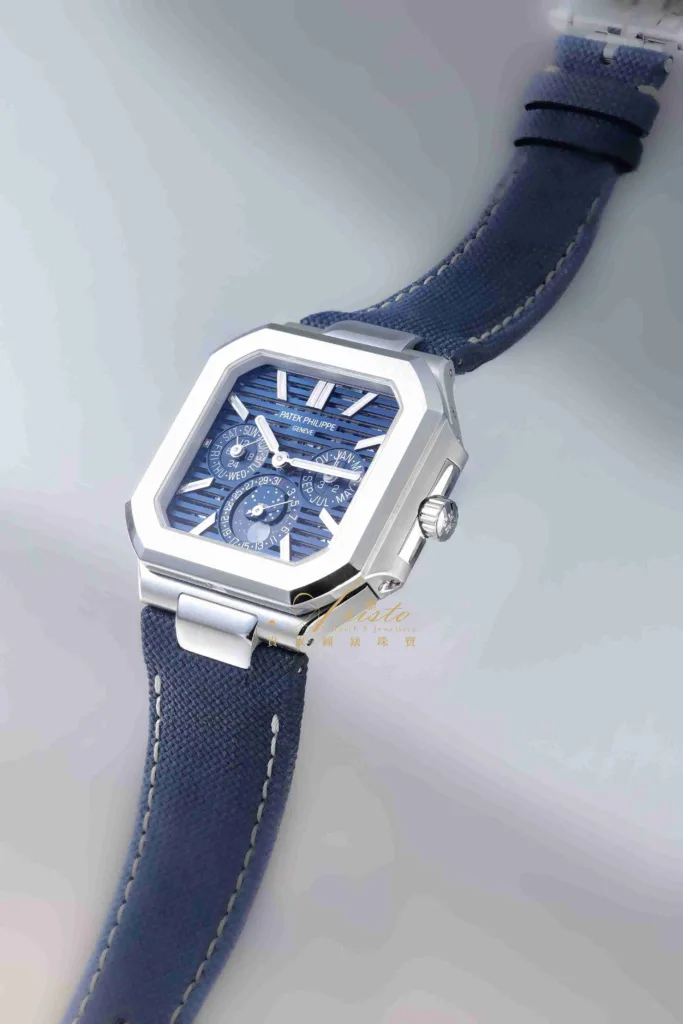
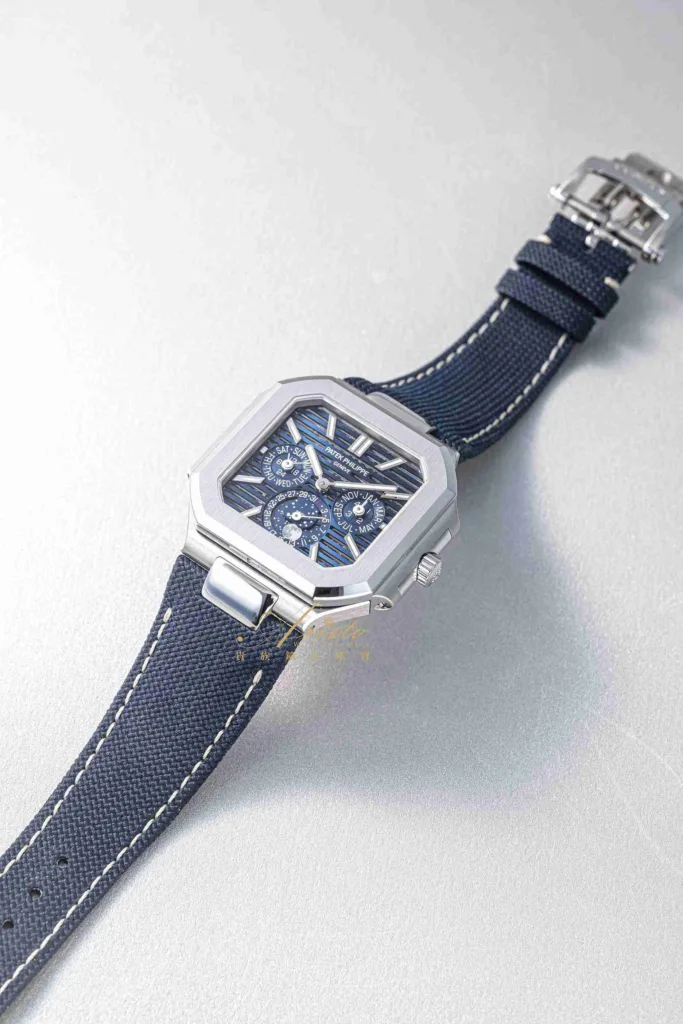
Patek Philippe Cubitus 5840P-001
Cubitus, by contrast, has a much shorter history — yet one that has generated just as much conversation. This new collection, defined by rounded squares and sharp geometric lines, made its official debut in 2024, and from the outset drew polarized reactions: some dismissed it as merely a “squared-off extension” of the Nautilus, while others praised its boldness in breaking away from the conventional forms of the sports watch. It was the 5840P, however, launched in 2026, that truly gave Cubitus its footing. As the collection’s first grand complication, this skeletonized perpetual calendar marks Cubitus’s arrival at maturity — its evolution from a talked-about newcomer into a bona fide collection standing shoulder to shoulder with the Nautilus.
In-Depth Comparison
Patek Philippe Nautilus 5740/1G-001
Patek Philippe Cubitus 5840P-001
If the Nautilus 5740 represents the inheritance of a classic, then the Cubitus 5840 represents the voice of a new generation — together, the two embody two distinct aesthetic philosophies drawn from the very same bloodline.
Dial Layout
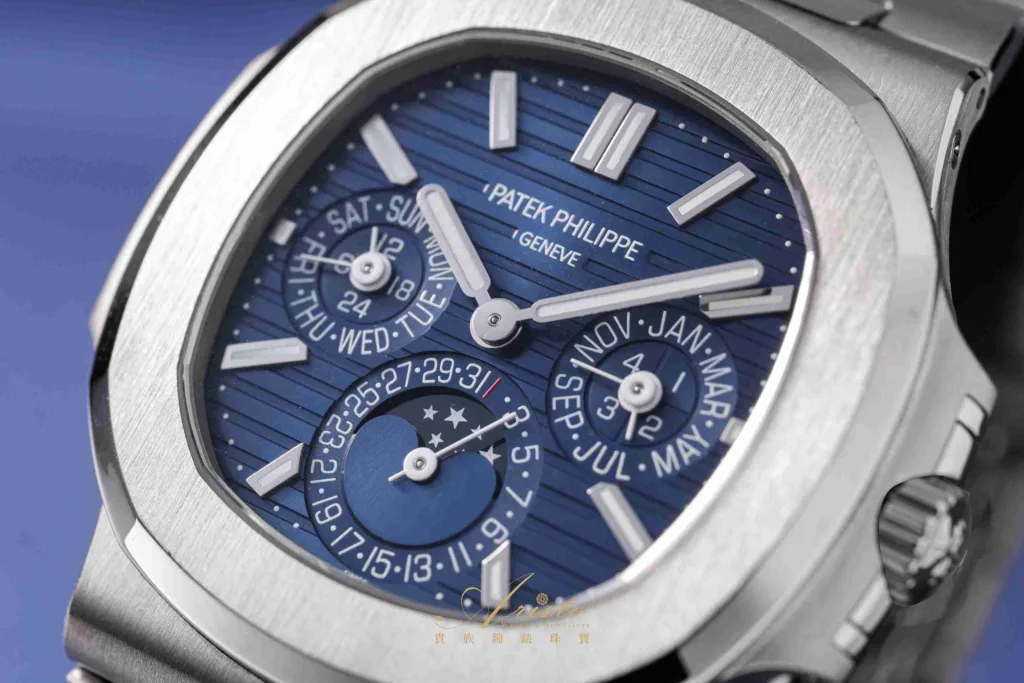
The Nautilus 5740 continues the brand's classic 3-6-9 perpetual calendar layout
Open up the dial, and the difference in character between the two becomes immediately clear. The Nautilus 5740 continues the brand’s classic 3-6-9 perpetual calendar layout: the 3 o’clock position shows the month and leap year indication, the 6 o’clock position houses the date window and moon phase, and the 9 o’clock position handles the day of the week and the 24-hour indicator, all set against a blue sunburst dial with horizontal embossed striping. Orderly, symmetrical, and restrained, it is the brand’s enduring design language. As for the moon phase, the 5740 takes a relatively traditional approach — the moon phase disc is set within the date window at 6 o’clock, its waxing and waning shown through a circular aperture, disciplined and understated.
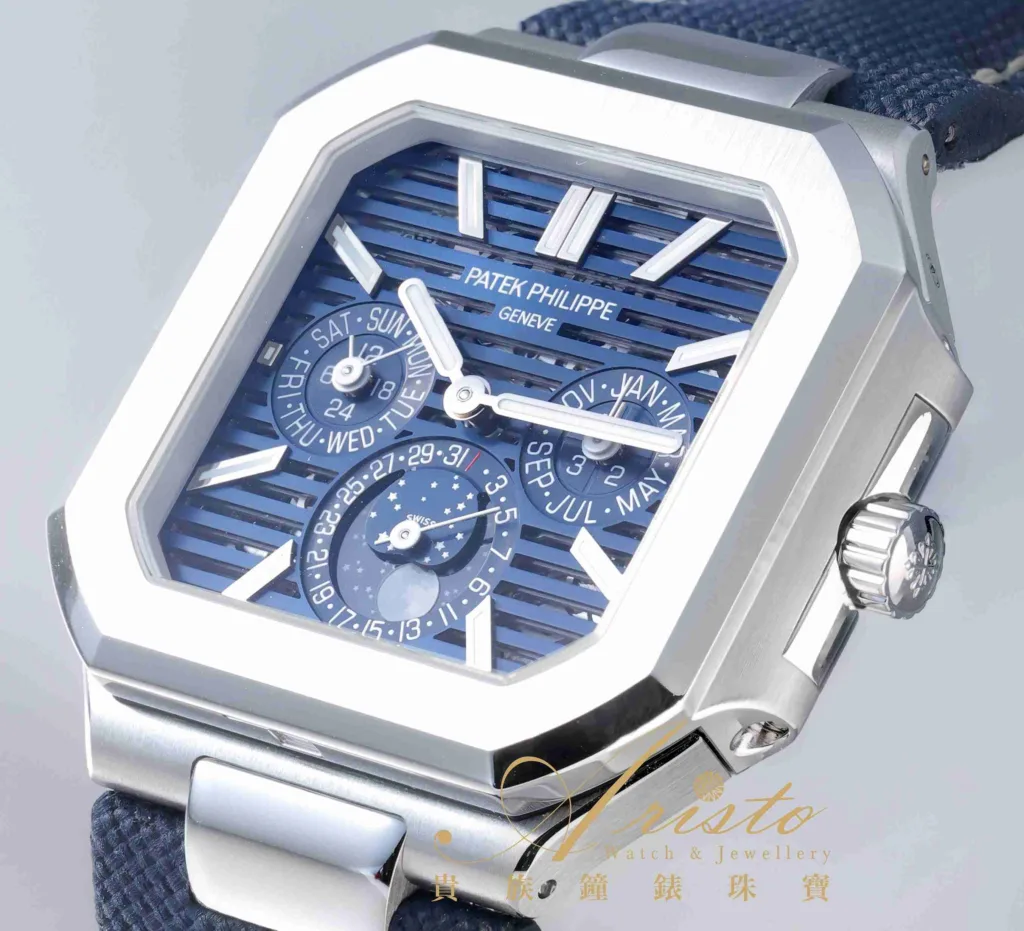
The Cubitus 5840's dial features a skeletonized, layered design resembling a set of louvred shutters
The Cubitus 5840, by contrast, charts a course full of mechanical tension. Its dial adopts a skeletonized, layered design reminiscent of louvred shutters, allowing the movement’s intricate gear train to appear and disappear from view, giving the dial an entirely fresh visual identity. As the angle of light shifts, the blue PVD coating shows a gradient effect ranging from deep navy to a metallic blue-grey, accentuating the sense of depth created by the openworked design. The moon phase at 6 o’clock also differs markedly: where most traditional perpetual calendars rely on the familiar twin-disc moon phase mechanism, this time the brand has instead adopted a single, oversized moon motif, its surface laser-engraved with three-dimensional lunar texture, completing one full rotation every 29.53 days. The design draws its inspiration from the large-scale moon display of the World Time Moon, released for the brand’s 175th anniversary.
Case and Bracelet
Even with the addition of the perpetual calendar function, the Nautilus 5740 retains its slim proportions
The design of the case and bracelet is where the two collections’ differing identities are most immediately apparent. The Nautilus 5740 is built around a 40mm-diameter white gold case measuring just 8.42mm thick, finished with a combination of polishing and satin brushing. Its lines remain smooth and elongated, and even with the addition of a perpetual calendar function, it retains a slim profile that slips easily under a shirt cuff, sitting smoothly and comfortably on the wrist. The calendar correctors are discreetly positioned along the side of the case, all but invisible at first glance. The signature integrated 18K white gold bracelet exhibits a rounded, elegant, streamlined beauty that fully expresses the Nautilus’s enduring design philosophy.
The Cubitus 5840's case silhouette blends squared and rounded forms
The Cubitus 5840, on the other hand, delivers an entirely different presence on the wrist. Its proportions are considerably bolder, built around a 45mm-diameter platinum case measuring 10mm thick, its silhouette blending squared and rounded forms to give the watch a stronger sense of geometric definition and masculine character. A square case tends to read as more visually substantial on the wrist than a round case of equivalent size, and the Cubitus 5840 carries itself with a correspondingly more assertive presence. Unlike the Nautilus’s integrated bracelet, the Cubitus 5840 is fitted with a navy blue composite-material strap woven in a Cordura textile pattern, paired with a patented triple-folding platinum clasp that lends the watch a distinctly youthful edge.
Movement Performance
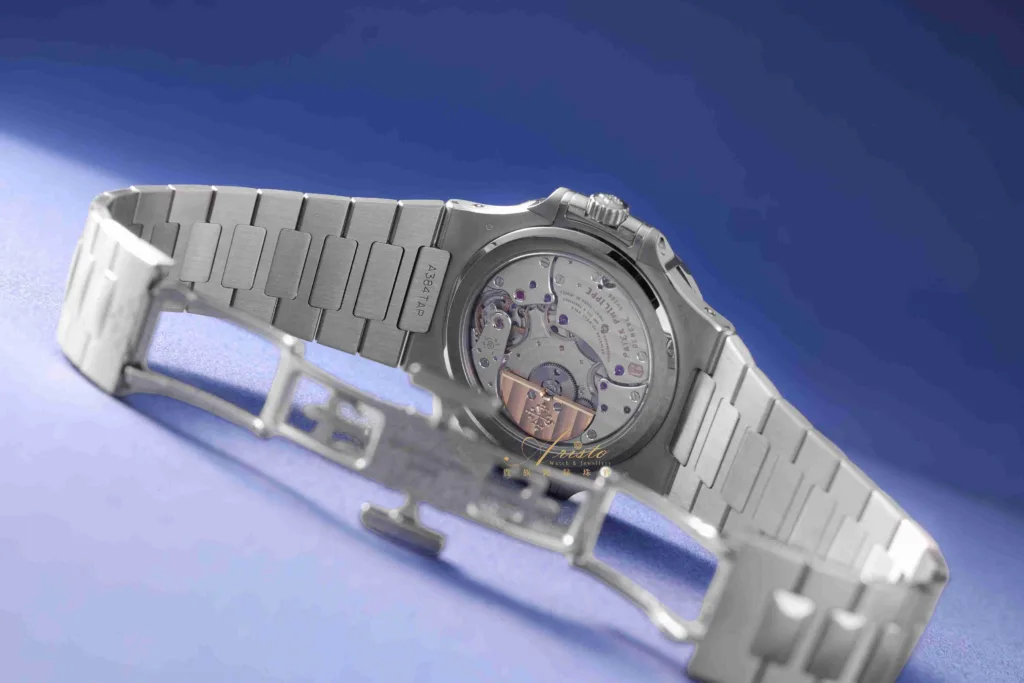
The Nautilus 5740 is powered by the Cal. 240 Q automatic movement
At the movement level, the two watches are, in fact, cut from the same cloth. The Nautilus 5740 is powered by the Cal. 240 Q automatic movement, a classic perpetual calendar calibre the brand has used since the 1980s. Equipped with a Gyromax balance wheel and a Spiromax hairspring, it beats at 21,600 vibrations per hour and offers a power reserve of between 38 and 48 hours. Through continual refinement over the years, it has become one of the watch industry’s most reliable and elegant examples of a slim perpetual calendar movement.
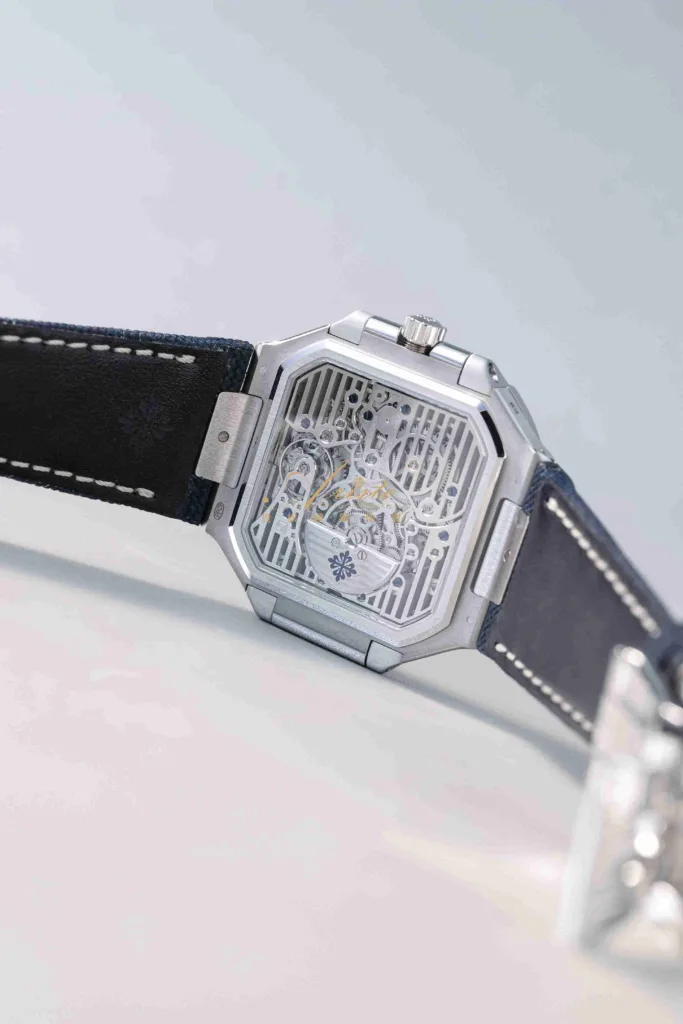
The Cubitus 5840 is powered by the Cal. 28-28 Q SQU automatic movement
As for the Cubitus 5840, the brand has built upon the architecture of the Cal. 240Q to develop an entirely new skeletonized automatic movement, the Cal. 28-28 Q SQU, which likewise beats at 21,600 vibrations per hour and offers a 38-to-48-hour power reserve. To suit Cubitus’s square silhouette, however, the brand undertook a fresh geometric reworking, reshaping the movement itself into a square form so that it fills the case almost edge to edge. The openworked bridges echo the louvred-shutter motif found on the dial. To further heighten the sense of depth and transparency within the skeletonized structure, the Cubitus 5840 notably uses sapphire crystal bearings in place of traditional rubies, giving the entire openworked movement an unobstructed, luminous quality — a genuinely unprecedented step in Patek Philippe’s history.
Which One Belongs in Your Collection?
Patek Philippe Nautilus 5740/1G-001
Patek Philippe Cubitus 5840P-001
If you are someone who is deeply versed in traditional watchmaking aesthetics, and who favours understated luxury and slender proportions, the Nautilus 5740 is unquestionably the watch for you — it is the perfect embodiment of what it means to be a classic. But if you crave a break from convention, are drawn to bold geometric lines and avant-garde architectural aesthetics, and appreciate the mechanical beauty that openworking reveals, then the Cubitus 5840 will undoubtedly offer you an entirely new experience on the wrist.